The setup.
Girls! Girls! Girls!? launched on Steam in May 2023. Launch week brought $51,747 on the back of 19,867 wishlists. Then the familiar indie story: a slow slide as launch visibility faded. By the October 2023 report, monthly revenue was $2,544.
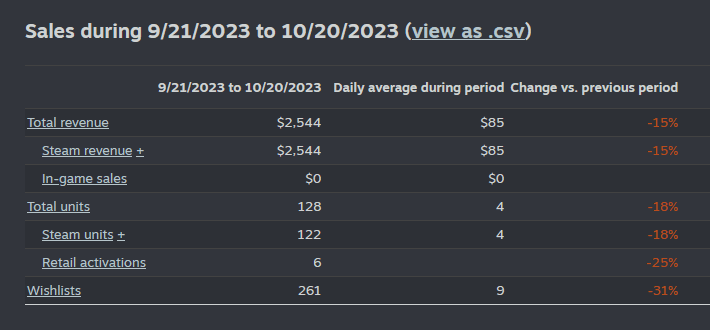
This was our own game. There was no client to reassure and no agency to blame, which made the diagnosis unusually honest: the game was commercially viable but its Steam presentation, audience targeting, and catalog operation were not doing their jobs.
The work.
Over the following months we rebuilt the operation across six workstreams. None of them is secret, and none of them is a trick. What mattered was doing all of them, on schedule, with a baseline before and a measurement after each change.
This period is where the CREPE framework and the evidence standard we now sell were first worked out: classify the real category, reposition the promise, test against evidence, plan the beats, and keep executing.
The documented climb.
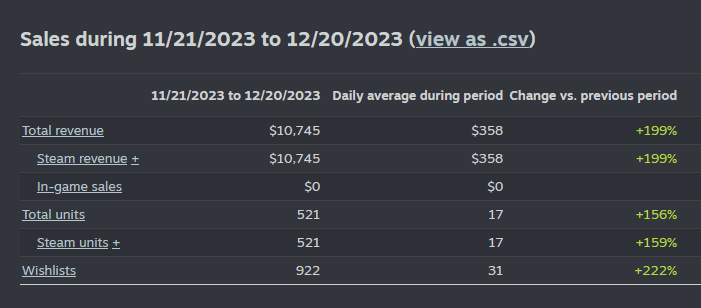
Nov 21 to Dec 20, 2023: $10,745. The first five-figure month since the launch window.
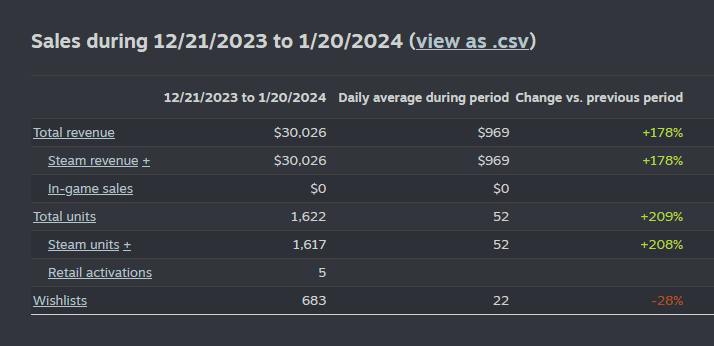
Dec 21, 2023 to Jan 20, 2024: $30,026.
Through 2024 the cadence continued: content updates, discount windows planned against the catalog calendar, and creator drops timed to each update. Monthly figures for that stretch are not reproduced here because we have not published the underlying reports; the chart above plots only the five documented reports, and the dashed line between them is illustrative.
The Daily Deal.
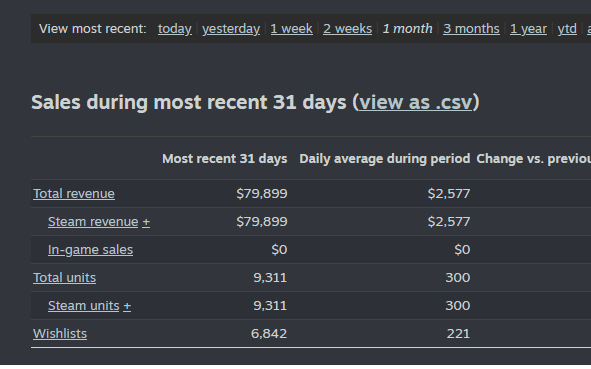
June 11, 2025. Valve featured Girls! Girls! Girls!? as a Steam Daily Deal. We had pitched feature placements repeatedly in the months before. Valve decides these placements, and no pitch guarantees selection.

In the 31 days that followed: $79,899 in revenue and 9,311 units sold, about $28,000 above the launch week two years earlier.
What this proves, and what it does not.
It provesthat ContentCrepe’s operating system is real and was run end to end by the person who now sells it: diagnosis, repositioning, implementation, measurement, and two years of unglamorous cadence. It proves we know what the work looks like from the developer’s chair, including the parts that fail quietly.
It does not provethat any specific change caused any specific revenue. The recovery overlapped with content updates, price and discount changes, seasonal traffic, and eventually a front-page feature that Valve chose to grant. It does not prove that a client’s game will follow the same curve. Different game, different market, different constraints, different result.
That is the standard we apply to our own best story. It is the same standard we will apply to yours.